Acne
Acne may appear as blackheads, whiteheads, inflamed pimples or deep, painful lesions. Treatment depends on the type and severity of acne and the risk of scarring.

Explore options for acne, dark spots and acne scars, and learn how treatment choices vary according to the type and severity of the concern.
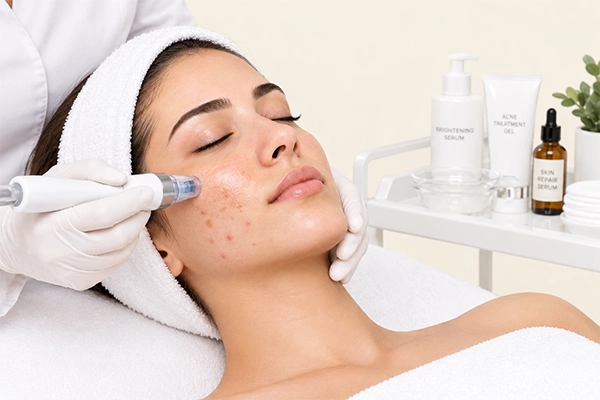
Pigmentation may develop after inflammation or sun exposure, while acne can involve clogged pores, excess oil and inflammation. Acne may also leave dark marks or scars that differ from superficial pigmentation.
Treatment selection depends on the nature of the concern, skin tone and sensitivity, previous treatments and the desired outcome.
Acne may appear as blackheads, whiteheads, inflamed pimples or deep, painful lesions. Treatment depends on the type and severity of acne and the risk of scarring.
Dark spots may result from sun exposure, inflammation or hormonal changes. Examples include post-acne marks, melasma and some sun-related spots.
Marks may be changes in skin colour alone, or indentations and textural scars. Depressed scars do not always respond to creams alone and may require different procedures.
Topical treatments are applied directly to the skin and may be a first option for many cases of acne or pigmentation. Product selection depends on skin type and the severity of the concern.
Hormonal treatment may help some women whose acne is influenced by hormonal changes, particularly when breakouts occur around the jawline and chin or worsen at certain times of the menstrual cycle. It is not suitable for everyone.
Certain combined pills contain oestrogen and progestin and may reduce the effects of hormones that increase skin oil production. Results can take several months to become noticeable.
Spironolactone affects the action of certain hormones and may be prescribed for some women with persistent or hormonally influenced acne. It is not suitable for everyone and requires medical assessment and monitoring based on health status and other medicines.
Isotretinoin is an oral medicine used for some severe forms of acne, acne that causes scarring, or cases that have not improved sufficiently with other treatments. It reduces oil production and can improve acne in suitable patients.
The clinician determines the dose and duration based on weight, condition, response and side effects. A course may last several months, with regular reviews to assess progress and safety.
Chemical peels use a suitable solution to exfoliate selected layers of the skin. They may improve some types of pigmentation, acne marks and skin texture, but results depend on the peel, the condition, skin tone and the provider's expertise.
Targets the outermost layers of the skin and may improve mild pigmentation and skin appearance. Several sessions may be needed depending on the condition.
Reaches deeper skin layers than a superficial peel and may be used for selected cases of pigmentation and sun damage. Redness, peeling and a longer recovery period may occur.
A stronger, more intensive procedure with greater risks and a longer recovery period. It is not suitable for every skin type or condition, and requires careful medical assessment.
Potential side effects include irritation, redness and peeling. Changes in skin colour, scarring or infection can occur in some cases. Skin prone to pigmentation requires careful selection of peel type and depth.
Laser devices and light-based treatments work in different ways and may be used for selected pigmentation concerns, acne marks or scars. No single device is suitable for every case.
Depressed and raised scars differ from the dark marks left by acne. Treatment options may include microneedling, selected laser treatments, medical peels or other procedures chosen by a qualified provider.
Results vary from person to person depending on the concern, its severity and adherence to the treatment plan. The images below show the general stages a treatment may go through.
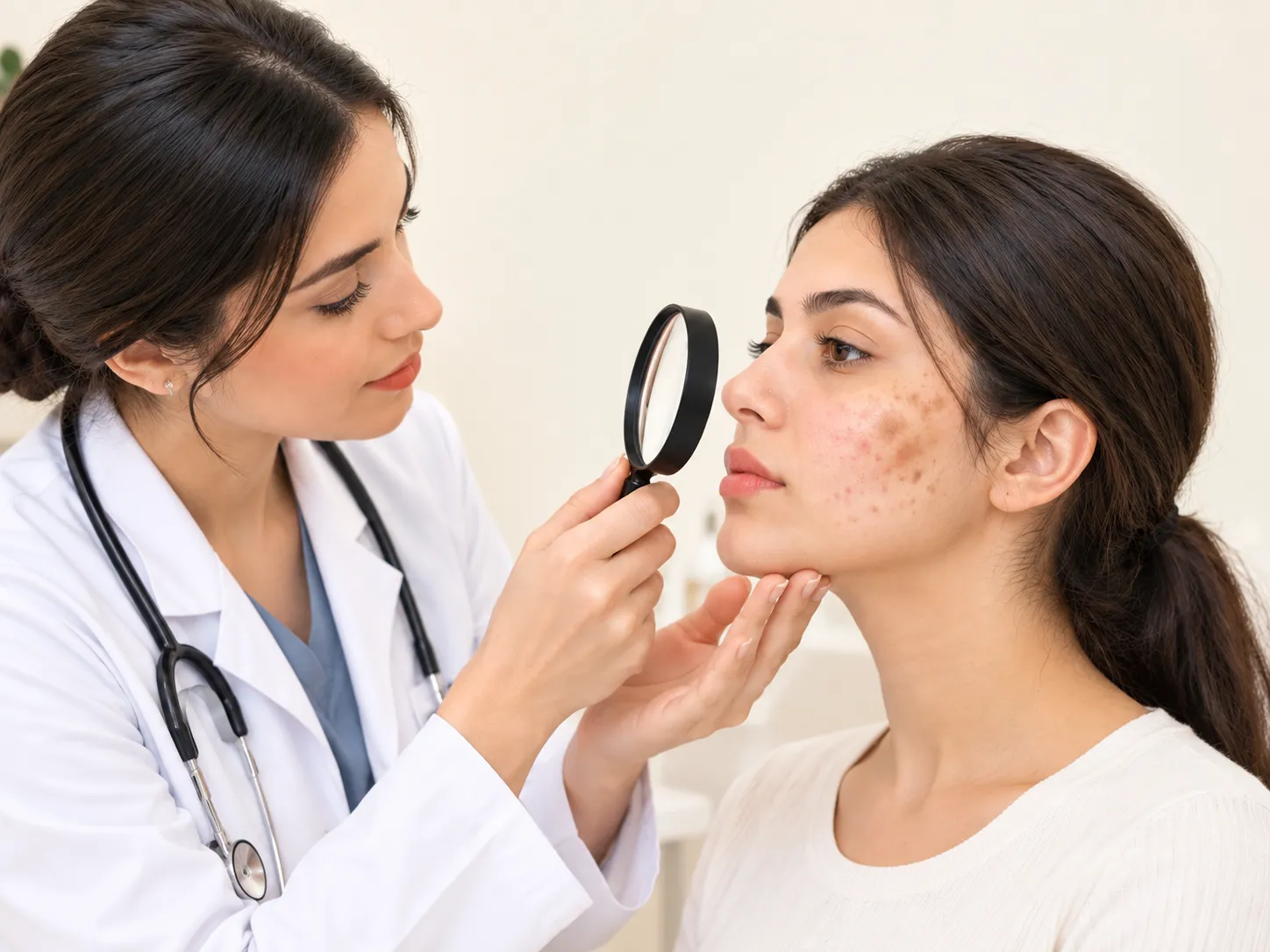 Before Treatment
The specialist begins by assessing the concern type, severity, skin tone and medical history to determine a suitable plan.
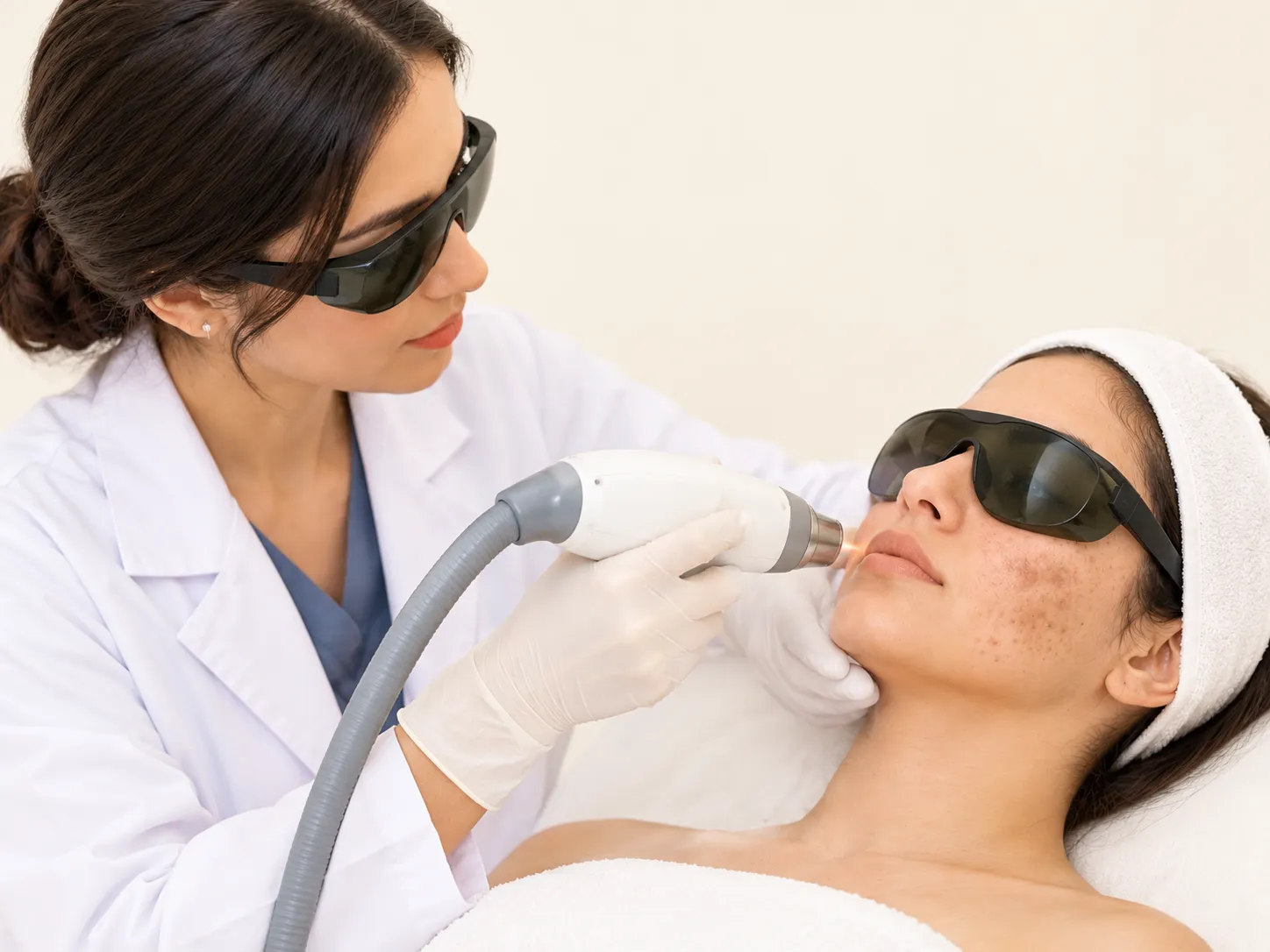 During Treatment
The plan is carried out in stages, with regular follow-up to evaluate response and adjust the approach if needed.
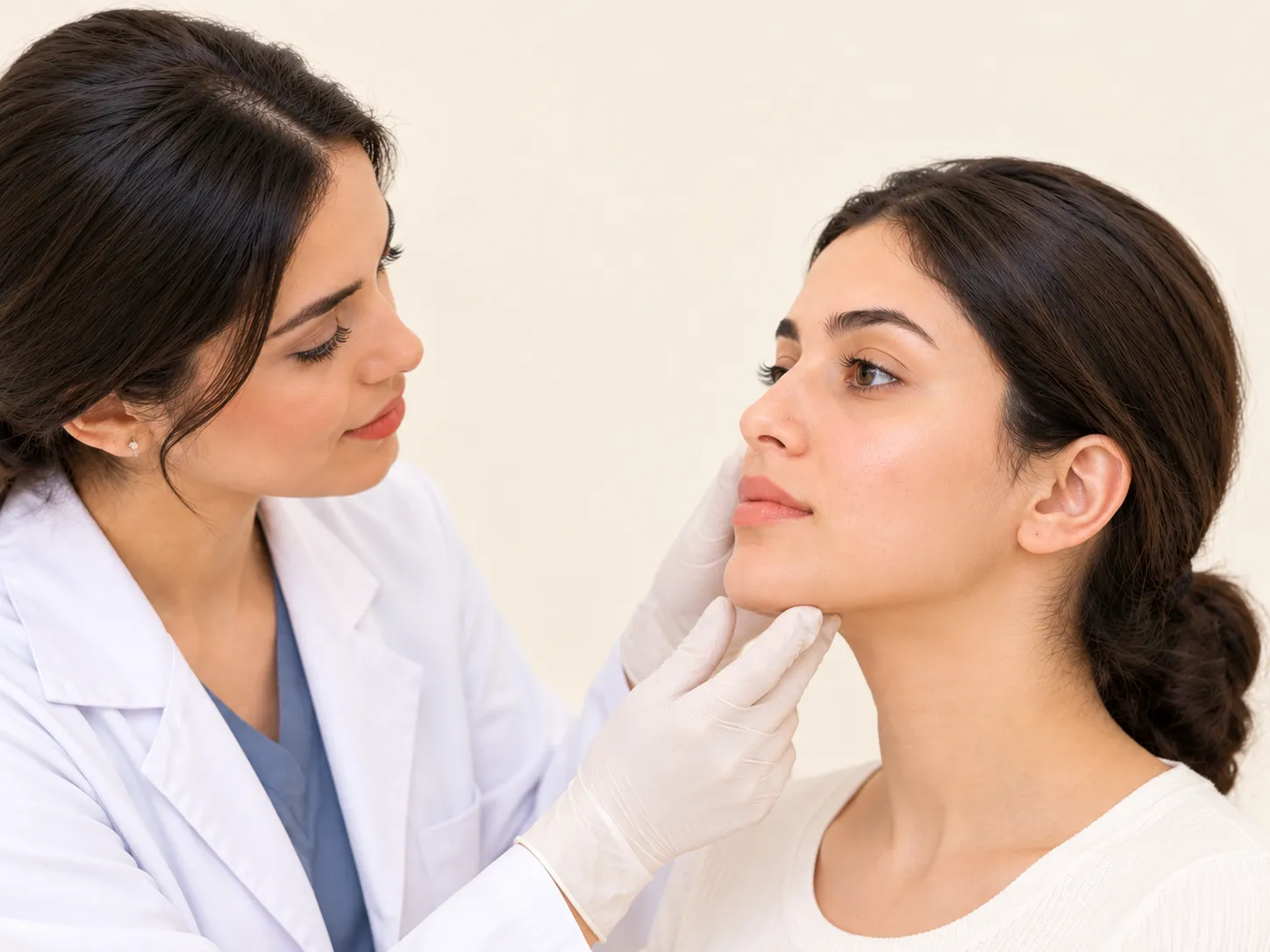 After Treatment
Improvement appears gradually with commitment to daily care, sun protection and regular follow-up.
Use a suitable broad-spectrum sunscreen and reapply as directed. Sun protection helps reduce the worsening of pigmentation.
Choose a cleanser suited to your skin and avoid harsh scrubbing or squeezing pimples, which may worsen inflammation and marks.
Improvement may take weeks or months. Follow the agreed treatment plan and seek professional review if severe irritation or unusual symptoms occur.
Contact us via WhatsApp to ask about available treatments and appointments.